Sectoral and Thematic Funds: When to Consider (2026)
In 2026, many Indian investors look for focused ways to participate in visible trends such as manufacturing upgrades, energy transition, or domestic consumption. Sectoral and thematic mutual funds can offer that focused exposure within the mutual fund structure, with professional research, daily NAV disclosure, and portfolio transparency.
Table of Contents
- Sectoral and thematic funds in SEBI categories
- Sectoral vs thematic: key differences that matter to investors
- Why investors use sectoral and thematic funds
- When to consider sectoral and thematic funds
- How to evaluate a sectoral or thematic fund before investing
- Taxation overview for Indian investors (2026)
- Checklist: when a sectoral or thematic fund fits well
- FAQs: People also ask about sectoral and thematic funds
- Closing perspective
In this blogpost, I will explain when sectoral and thematic funds may fit, how they differ, and how to use them in a portfolio without losing sight of diversification and alignment to goals.
Sectoral and thematic funds - SEBI categories
Sectoral and Thematic schemes follow a focused mandate, typically by maintaining a high minimum allocation to the chosen sector or theme.
That single design choice, concentration, is what can make these funds useful for targeted participation in a trend, and also what makes portfolio role and sizing important.
What is a sectoral fund?
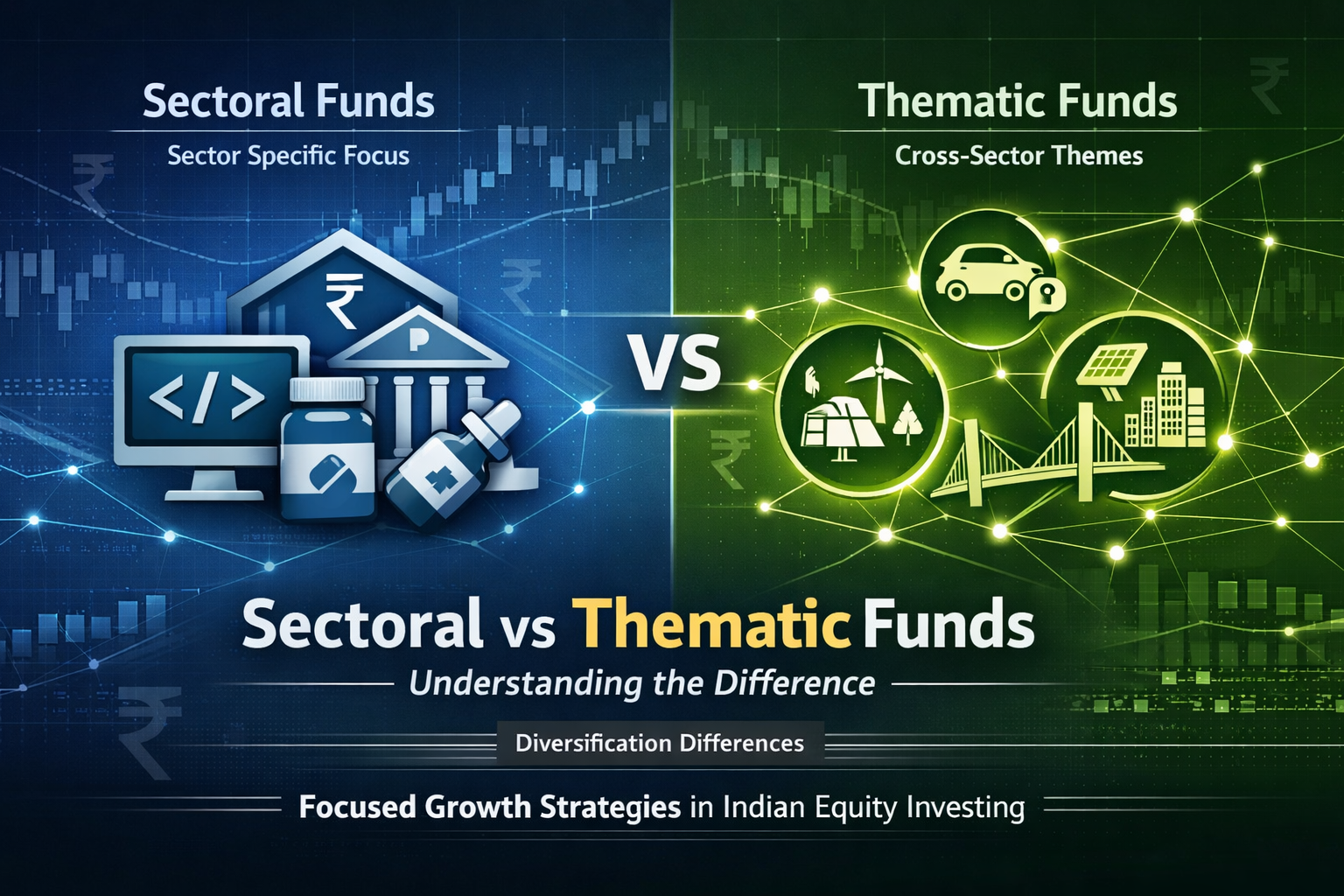
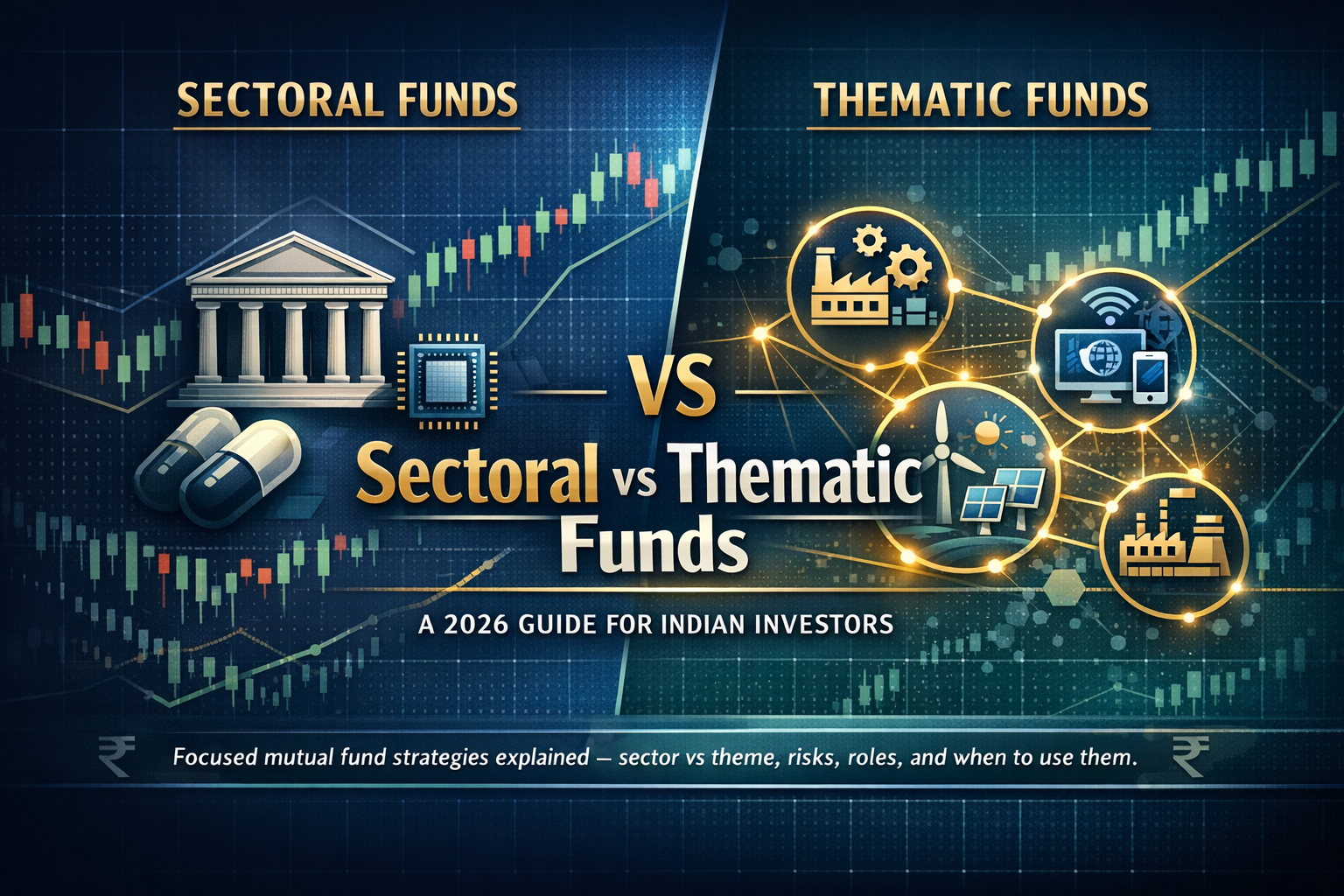
A sectoral fund focuses on one sector or industry, for example banking, information technology, pharma, or infrastructure. Under SEBI’s categorisation, Sectoral and Thematic schemes are equity schemes with a minimum allocation to the relevant sector or theme.
In practical terms, the fund’s fortunes track that sector’s business cycle more closely than a broad market diversified fund.
What is a thematic fund?
A thematic fund invests across multiple sectors that connect to a theme, for example manufacturing, digital ecosystem, or energy transition. Thematic portfolios can hold companies from different industries, as long as they fit the theme definition in the scheme’s documents.
Sectoral vs thematic: key differences that matter to investors
| Factor | Sectoral funds | Thematic funds |
|---|---|---|
| Core idea | One sector exposure | Theme exposure across sectors |
| Diversification within the fund | Lower, because one sector dominates | Often higher than sectoral, but still focused |
| What drives returns | Sector cycle, regulation, competition, credit, and pricing in that sector | Theme adoption, policy tailwinds, innovation, and supply chain shifts |
| Monitoring needs | Higher | High |
| Portfolio role | Tactical or satellite allocation | Tactical or satellite allocation, sometimes longer theme horizon |
Even when a thematic fund holds multiple sectors, the holdings can still be correlated because they depend on the same economic driver. Reading the scheme’s portfolio and the theme definition in the Scheme Information Document matters.
Why investors use sectoral and thematic funds
Sectoral and thematic funds are tools. When used with clarity, they can add intent to an equity allocation.
Common investor motivations include:
- Expressing a specific market view without buying individual stocks
- Aligning a part of equity exposure to a structural trend
- Complementing a diversified core with a focused satellite sleeve
- Accessing professional research in a narrow opportunity set
A practical way to think about them is that they are not substitutes for broad diversification. They are overlays.
When to consider sectoral and thematic funds
The most useful question is not which theme is popular, but when a focused fund aligns with goals, horizon, and portfolio construction.
When the portfolio already has a diversified equity core
Focused funds tend to work better as additions, not foundations. If an investor’s equity allocation already includes diversified strategies such as flexi cap, large cap, multi cap, or broad index exposure, then a thematic or sectoral position can act as a satellite sleeve.
This structure can help keep the overall equity portfolio diversified while still allowing a targeted tilt.
When the investor can stay invested through a full cycle
Sectors and themes move in cycles. A narrow exposure can go through long periods of relative underperformance even when the long-term story remains intact.
An investor considering a sectoral or thematic fund generally benefits from aligning the holding period with the nature of the cycle, and with the financial goal timeline, rather than with short-term market narratives.
When the theme has clear, measurable drivers
A theme becomes easier to evaluate when it has observable drivers that can be tracked over time. Examples of measurable drivers include:
- Capacity expansion and capex indicators in a supply chain
- Credit growth and asset quality trends in financials
- Export order flows and currency sensitivity for specific industries
- Policy frameworks and tender pipelines where relevant
This does not remove uncertainty. It simply improves the investor’s ability to monitor whether the original thesis remains relevant.
When the investor can monitor and rebalance
Sectoral and thematic funds are not set-and-forget products in the same way many diversified funds can be. Portfolio drift can occur if a theme performs strongly and becomes an outsized part of equity exposure.
A rebalancing approach can be defined upfront, for example reviewing allocation at set intervals or when the position crosses a chosen band. The purpose is discipline, not prediction.
When position sizing stays modest and intentional
Many investors use focused funds to express a view while limiting impact on the overall portfolio. A small allocation can allow participation while keeping diversification intact.
A simple framework is:
- Define the role: tactical tilt or longer theme participation
- Define maximum allocation within equity
- Define review frequency
- Define exit criteria linked to goals and allocation bands, not headlines
Remember! This is a portfolio construction decision. It is not a return forecast.
How to evaluate a sectoral or thematic fund before investing
A sectoral or thematic fund can look similar to another fund on name alone, but differ meaningfully in holdings and implementation. Reviewing documented information is essential.
Key checks that usually add clarity:
- Theme definition in the Scheme Information Document and how the AMC operationalises it
- Portfolio overlap with existing holdings in the investor’s portfolio
- Top holdings concentration and whether the fund relies on a small set of companies
- Market capitalisation mix and how that affects volatility
- Expense ratio, typically seen in the range of about 0.1 percent to 2.5 percent across mutual fund schemes in India, depending on category and plan type, and disclosed by the fund.
Taxation overview for Indian investors (2026)
Sectoral and thematic funds are equity mutual funds for taxation purposes when they meet equity exposure criteria as per applicable tax rules. Taxation depends on holding period and the nature of gains, and it can change through amendments.
For tax decisions, investors generally benefit from checking the latest Income Tax Department guidance applicable on the transaction date.
Checklist: when a sectoral or thematic fund fits well
Use this quick checklist to decide whether the idea fits the portfolio context:
- The investor has a diversified equity core already in place
- The investment goal horizon allows staying invested through a sector or theme cycle
- The theme has clear drivers that can be tracked without relying on forecasts
- The allocation is capped as a satellite position within equity
- The investor has a review and rebalancing method defined in advance
- The fund’s scheme documents clearly explain the mandate and portfolio construction approach
If multiple items are unclear, it can be useful to pause and first strengthen the core diversified allocation.
FAQs: People also ask about sectoral and thematic funds
Are sectoral and thematic funds the same?
They are related but not identical. Sectoral funds focus on one sector, while thematic funds invest across sectors connected to a theme.
When does it make sense to add a thematic fund?
It can make sense when an investor already holds diversified equity funds for core exposure, and wants a modest satellite allocation aligned to a measurable, monitorable theme, with a holding period that can span the theme’s cycle.
Can beginners invest in sectoral or thematic funds?
Beginners often find diversified equity funds easier to understand and hold through volatility because diversification reduces reliance on one narrow driver. A focused fund can be considered later once the investor can track drivers, concentration, and portfolio overlap.
Do sectoral or thematic SIPs reduce risk?
A SIP mainly spreads entry timing over multiple dates. It can help manage timing risk, but it does not change the underlying concentration of a sectoral or thematic mandate. The portfolio will still reflect the sector or theme cycle.
How many sectoral or thematic funds can a portfolio hold?
Holding multiple focused funds can create hidden overlap and complexity. Many portfolios benefit from keeping focused allocations limited and ensuring each has a distinct role, with the diversified core doing most of the work.
Closing perspective
Sectoral and thematic funds can add precision to an equity portfolio when used intentionally. In 2026, with rapid shifts in technology, supply chains, and policy priorities, the ability to take targeted exposure through a regulated mutual fund structure is valuable. The key is to treat these funds as portfolio tools, define their role clearly, and keep the overall plan anchored to goals and diversification. (o-g-5-2)
Disclaimer: Mutual fund investments are subject to market risks. Read all scheme-related documents carefully before investing. Past performance is not indicative of future results. The content above is for educational and informational purposes only and should not be construed as investment advice.