Mid Cap Mutual Funds: A Practical Guide to Evaluation
Mid cap mutual funds invest in medium-sized Indian companies that sit between the large caps and small caps in terms of market presence and growth potential. In India, these funds typically align with SEBI's classifications and are designed to balance upside capture with a degree of earnings resilience.
Table of Contents
What are mid-cap funds and how they fit in a portfolio?
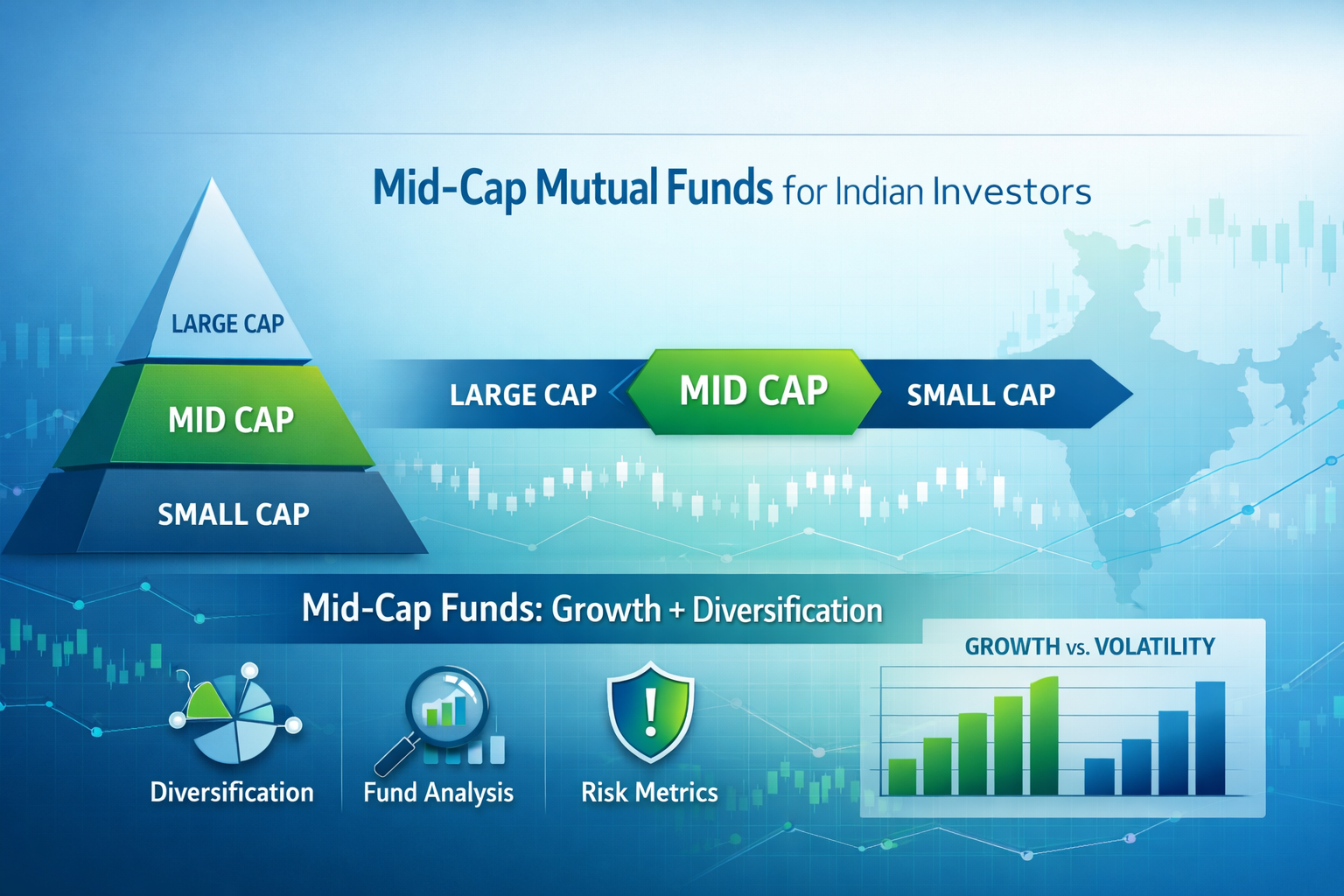
Mid-cap funds commonly target companies ranked roughly 101 to 250 by market capitalization. This positioning provides a blend of growth opportunities and brand-new earnings drivers, while remaining more diversified than small-cap pockets. The mid-cap category sits between the steadier growth of large caps and the higher volatility of small caps, offering a balance that can complement a well-rounded equity allocation.
Why invest in mid-cap funds?
The growth potential of mid caps has historically been strong, particularly during broad market upcycles. Mid cap funds can contribute to portfolio diversification by complementing large-cap holdings, potentially enhancing overall return profiles over longer periods. For investors with a moderate risk tolerance and a horizon of five years or more, mid-cap exposure can be a meaningful part of core equity allocation.
Risks and considerations you should keep in mind
- Volatility is higher than large-cap peers, especially during market downturns. Diversification within the mid-cap sleeve and a disciplined asset allocation approach can help manage drawdowns.
- Valuation swings can be pronounced; maintaining a patient, multi-year view helps capture long-term opportunities.
Key factors to evaluate mid-cap funds
Performance & Benchmark Comparison
Look for consistency in relative performance versus a mid-cap benchmark, not just trailing returns. Use rolling returns and longer time frames to assess durability across cycles.
Risk-Adjusted Metrics
- Consider alpha, Sharpe ratio, and downside capture to understand risk-adjusted outcomes. Experts highlight downside capture as a crucial metric for mid-cap funds. Fund Manager & House Expertise
- Track record across cycles, manager tenure, and the asset-management house’s philosophy. Most veteran investment advisors emphasizes manager experience and process as signals of durability.
Portfolio Characteristics
Review sector allocation, top holdings concentration, and number of holdings. A well-spread portfolio reduces concentration risk.
Expenses & Costs
Compare expense ratios and entry/exit costs, with a preference for lower-cost options when long horizons matter.
Fund Size (AUM)
Very small AUM may suffer liquidity issues; extremely large AUM can constrain agility. Consider a fund size that fits the fund’s strategy.
Consistency & Rankings
Ratings and rank stability over multiple periods can be informative, but avoid chasing one-off winners. Mutual fund investment advisors cautions against focusing solely on peak performers.
Active vs Index vs Factor
Some mid-cap options are active, some are index-based, and others use factor tilts such as quality or momentum. Align the choice with your style and risk tolerance.
How to use data and tools in your evaluation
- Use trusted mutual fund research sites and official trackers for NAVs, holdings, and risk metrics. Value Research Online, Morningstar India, and AMFI are credible starting points.
- Build a simple, evidence-based snapshot for a quick comparison. For example, a five-fund mid-cap snapshot might include key stats such as assets under management, 5-year return, and 3-year Sharpe ratio to gauge scale, consistency, and efficiency.
Common mistakes to avoid
- Chasing last year’s top performer; random switching often erodes long-run results. Beware of perils of chasing past winners.
- Underappreciating investment horizon; mid caps require patience to weather cycles. Keep an investment horizon of minimum 5 years or more.
- Overlooking checks such as transparency of holdings and manager commentary. A disciplined due diligence process helps maintain quality.
Conclusion
A disciplined evaluation framework helps you pick mid-cap funds that align with your risk tolerance and time horizon. Pair the framework with a suitable toolset, such as a mutual fund screener, to refine your shortlist. If you want deeper personalization, consider using risk profiling and asset allocation to map mid-cap exposure to your goals.
FAQs
- Q: What is a mid-cap fund?
- A: A mutual fund that primarily invests in medium-sized companies by market capitalization, typically in a defined band such as roughly 101 to 250 by market cap.
- Q: Should I invest in mid-cap funds?
- A: Mid caps can diversify and enhance growth potential within a balanced framework, especially for investors with a multi-year horizon and tolerance for volatility.
- Q: How many mid-cap funds should I hold?
- A: A diversified approach typically involves 2–3 funds with different investment styles to avoid overlap, depending on your overall portfolio size.
- Q: What is downside capture in mid-cap funds?
- A: It measures how well a fund preserves value in down markets relative to the benchmark; a stronger downside capture indicates better risk management during downturns.
- Q: Active vs index mid-cap funds, which is better?
- A: It depends on your preference for potential alpha and fees versus cost-efficiency and market exposure. Active strategies seek to beat the benchmark, while index funds track it closely with lower costs.
Disclaimer: Mutual fund investments are subject to market risks. Read all scheme-related documents carefully before investing. Past performance is not indicative of future results. The content above is for educational and informational purposes only and should not be construed as investment advice.