Best Flexi Cap / Multi Cap Mutual Funds Framework for 2026
Flexi cap and multi cap mutual funds offer Indian investors a flexible way to participate in equity market growth across market cycles. The SEBI categorization of these funds created clear distinctions in how managers allocate across large, mid and small caps. This framework helps you evaluate options systematically, without chasing headlines or short term performance. By focusing on disciplined selection criteria, you can build a resilient equity sleeve for your portfolio.
Table of Contents
- What is a Flexi Cap Fund?
- What is a Multi Cap Fund?
- Key Differences Between Flexi Cap and Multi Cap - Funds Allocation framework
- Managerial flexibility
- Suitability
- Tax and costs
- Benefits of Flexi Cap Funds
- Benefits of Multi Cap Funds
- Risks and Considerations
- Who Should Invest in Flexi Cap vs Multi Cap Investor alignment
- Time horizon and strategy
- How to Choose the Best Flexi Cap / Multi Cap Funds: A Step by Step Framework
- Conclusion
What is a Flexi Cap Fund?
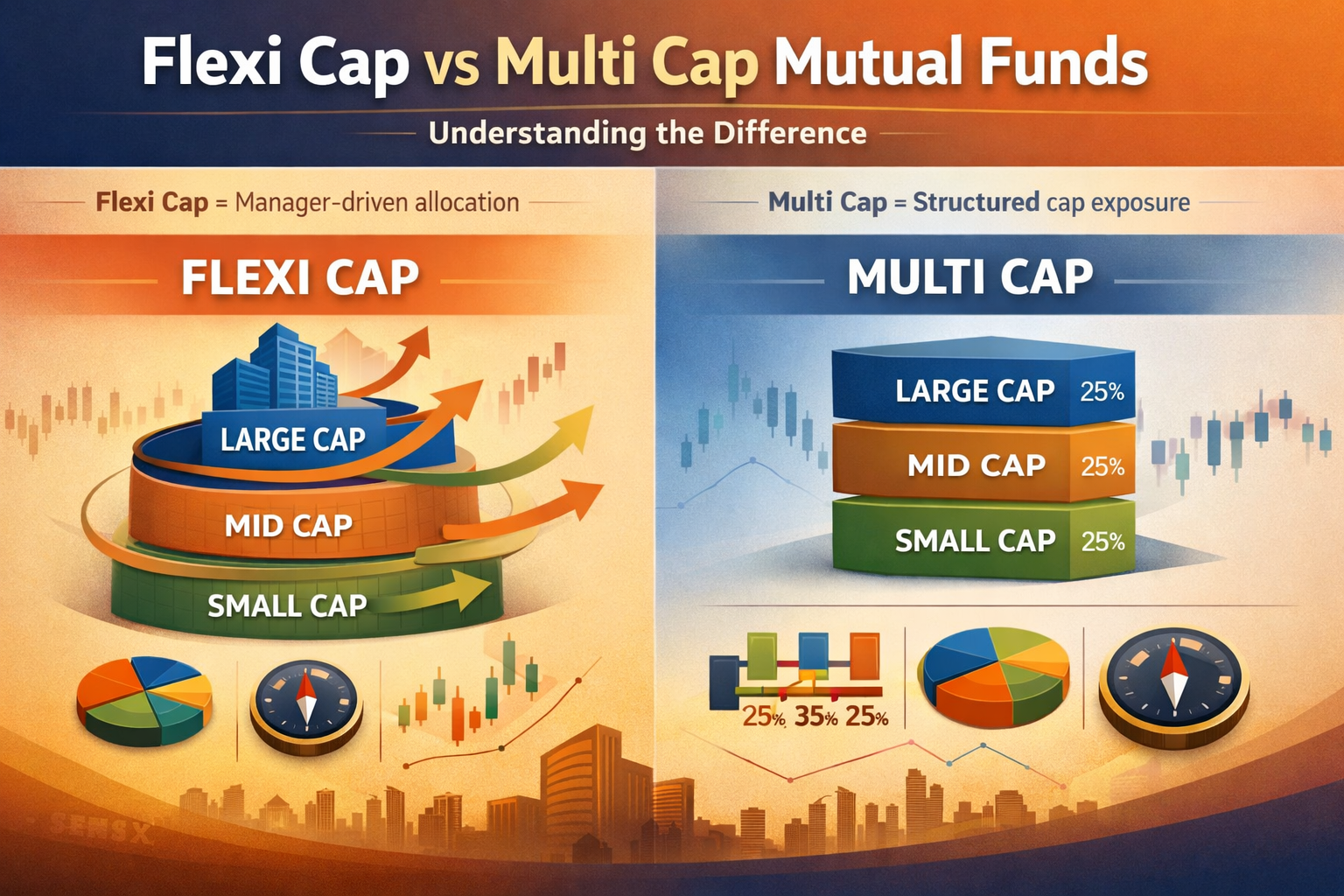
Flexi cap funds invest across all market capitalizations with no fixed allocation to any cap, while maintaining a broad equity focus. The key feature is manager discretion to tilt toward what they expect to perform best, across large, mid and small caps. This approach can help capture opportunities across cycles while maintaining diversification. These funds have a flexible mandate and the absence of rigid cap constraints. For anyone building a long term equity plan, this flexibility is a meaningful differentiator.
What is a Multi Cap Fund?
Multi cap funds aim to allocate across large, mid and small caps with a defined framework. In practice, these funds typically maintain a substantial equity tilt with explicit minimum exposure across cap segments. The intent is to combine growth potential with diversification across market caps, reducing concentration risk in any single segment.
Key Differences Between Flexi Cap and Multi Cap - Funds Allocation framework
- Flexi cap funds have no fixed cap allocation; managers decide the mix based on market conditions. This can enable nimble responses to evolving opportunities.
- Multi cap funds follow a stated framework that ensures exposure across large, mid and small caps, often with a minimum target in each segment.
Managerial flexibility
- Flexi cap portfolios rely more on the manager’s stock selection and sector views to navigate cycles.
- Multi cap portfolios emphasize diversified cap exposure, which can lead to steadier risk characteristics during choppier markets.
Suitability
- Flexi cap funds may suit investors who want a single fund mandate with active tactical adjustments.
- Multi cap funds may suit investors seeking broad diversification across market sizes with a structured approach.
Tax and costs
- Tax treatment is aligned with Indian equity funds
- Costs (Expense ratio) vary by fund and scheme. Always check the expense ratio and track record of consistency over longer horizons.
Benefits of Flexi Cap Funds
- Dynamically adjusting asset allocation lets managers adapt to macro shifts, potentially capturing upside in different cycles.
- One fund can provide broad market exposure without the need to switch funds as the market environment changes.
- Active stock selection and sector tilts may add value when cyclicals lead or lag.
Benefits of Multi Cap Funds
- Structured diversification across market caps can smooth volatility while maintaining growth potential.
- The exposure framework can help investors with a preference for less concentration risk in a single cap segment.
- The approach aligns with a long term, diversified equity allocation strategy.
Risks and Considerations
- Performance can be more sensitive to the manager’s choices in flexi cap funds during certain periods.
- In times when one cap segment dominates market leadership, rigid multi cap allocations may lag a bit if the strategy does not adapt quickly.
- As with all equity funds, past performance is not indicative of future results; consider a multi year horizon and diversify across asset classes.
Who Should Invest in Flexi Cap vs Multi Cap Investor alignment
- Active investors who want a flexible mandate and trust the manager’s tactical calls may lean to flexi cap funds.
- Investors seeking broad, rule-based diversification across market capitals may prefer multi cap funds.
Time horizon and strategy
- For long term growth with a preference for nimble exposure to market cycles, flexi cap can be attractive.
- For investors seeking a balanced, diversified equity sleeve with clear cap diversification, multi cap fits well.
How to Choose the Best Flexi Cap / Multi Cap Funds: A Step by Step Framework
Step 1 – Define Goals & Risk Tolerance
- Clarify your objective, whether growth or capital preservation through volatility, and align with fund characteristics.
Step 2 – Evaluate Long Term Performance
- Look for consistency across 5 to 7 years and performance in multiple market cycles. Use a steady track record as a key signal.
Step 3 – Review Fund Manager & Strategy
- Assess continuity of the investment team, the manager’s approach, and how they have navigated different market phases.
Step 4 – Compare Expense Ratio and AUM
- Lower costs help support net returns over time. Consider how a fund’s size affects flexibility and trading costs.
Step 5 – Analyze Portfolio Composition
- Examine cap mix, sector concentration, and the degree of concentration risk in the portfolio.
Step 6 – Check Risk Metrics
- Review volatility measures and risk indicators where available to gauge downside capture and stability.
Step 7 – Consider Tax and Exit Rules
- Understand how exit loads and tax treatment apply to your holding period.
Conclusion
Flexi cap and multi cap funds offer distinct ways to access Indian equity markets with sector and cap diversification. By applying a clear framework, you can select funds that align with your goals, risk tolerance, and time horizon.
Disclaimer: Mutual fund investments are subject to market risks. Read all scheme-related documents carefully before investing. Past performance is not indicative of future results. The content above is for educational and informational purposes only and should not be construed as investment advice.